

Teamwork in Tech
Ask any parent why they sign their five- to ten-year-old up for rec soccer, and the answer is almost always the same: to learn teamwork.
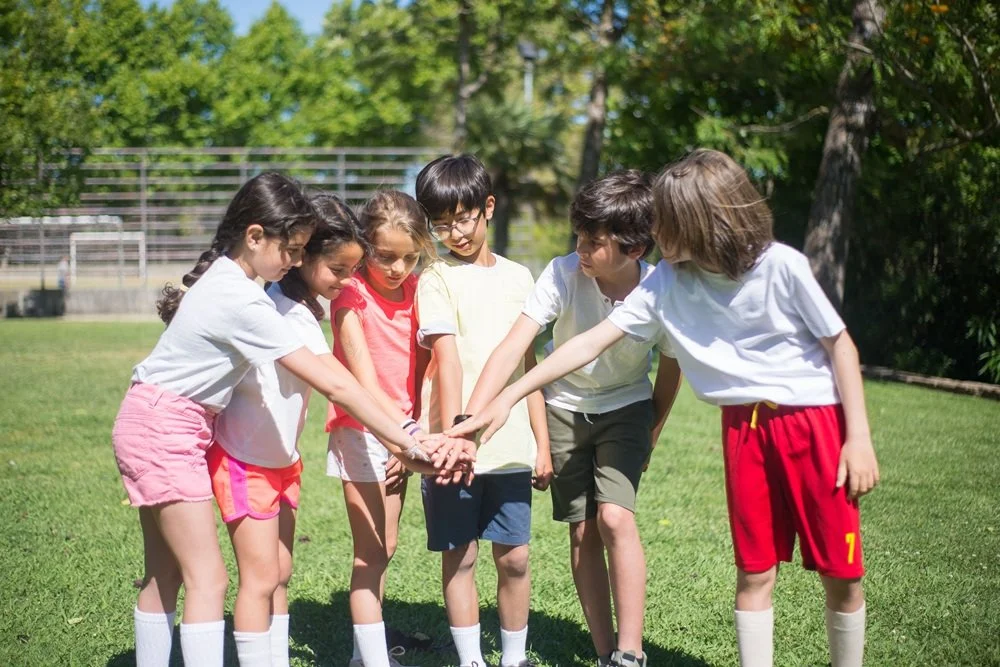
We tried a season of soccer when my son was in kindergarten, and well, it wasn't for us. I'm fairly certain he was mostly in it for the post-game snacks! Running around in the heat while trying to make contact with the ball, remember which goal you're aiming for, figure out passing, and filter out everyone shouting from the sidelines is a massive recipe for sensory overwhelm. We quickly realized we are indoor people, and on a traditional field, it's so easy for younger or sensory-sensitive kids to get lost in the shuffle while one or two players dominate the game.

Blending active physical play with interactive technology levels the playing field, ditching the chaos while turning group movement into natural, high-energy cooperation.
Shared Goals on the Smart Ball Wall
On our interactive smart ball wall, high scores aren’t won by one star athlete taking over the space. Instead, fast-paced games require kids to work together in real time:
Simultaneous Targets: Digital targets pop up across the entire surface, meaning one person physically cannot cover every angle alone.
Natural Communication: Kids instantly start talking; calling out targets, dividing the wall into zones, and handing off balls to whoever has the clearest angle.
Collective Wins: Because the game rewards total group accuracy, every single throw matters. Every kid feels the win equally.
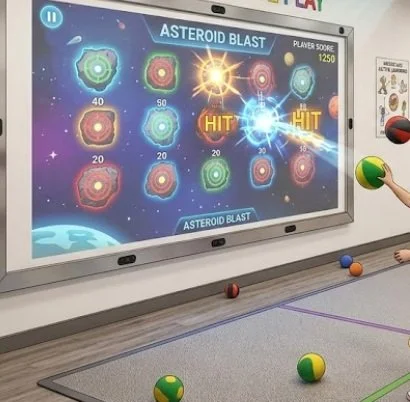
Active Cooperation on the Interactive Floor
While the ball wall sharpens quick reaction times and role division, the interactive floor brings dynamic group coordination right underfoot:
Interactive Relay Challenges: Kids coordinate movements, take turns triggering responsive graphics, and adapt on the fly to changing prompts.
Synchronized Team Play: Games require multiple players to step, jump, or navigate visual obstacles together, building spatial awareness and non-verbal teamwork without the pressure of a crowded field.
When physical activity feels like an immersive, real-world video game, nobody gets stuck staring at dandelions and dragonflies from the sidelines. Kids naturally learn how to talk to each other, support their peers, and win together, all while staying in constant motion.
What are you most excited about at STEAM Station? Let us know!
