

The Couch As a Balance Beam: How the Vestibular System Primes Reading Fluency
This evening, my husband and I were on the phone while our son hopped up on the couch. Not a normal hop; he literally scaled the narrow, hard back frame like a balance beam. When he reached the far end by the windows, he casually jumped down.
When he turned around for round two, his dad called out, "Hey, the couch isn't a balance beam."
I couldn't help but smile: "Actually, it kind of is."
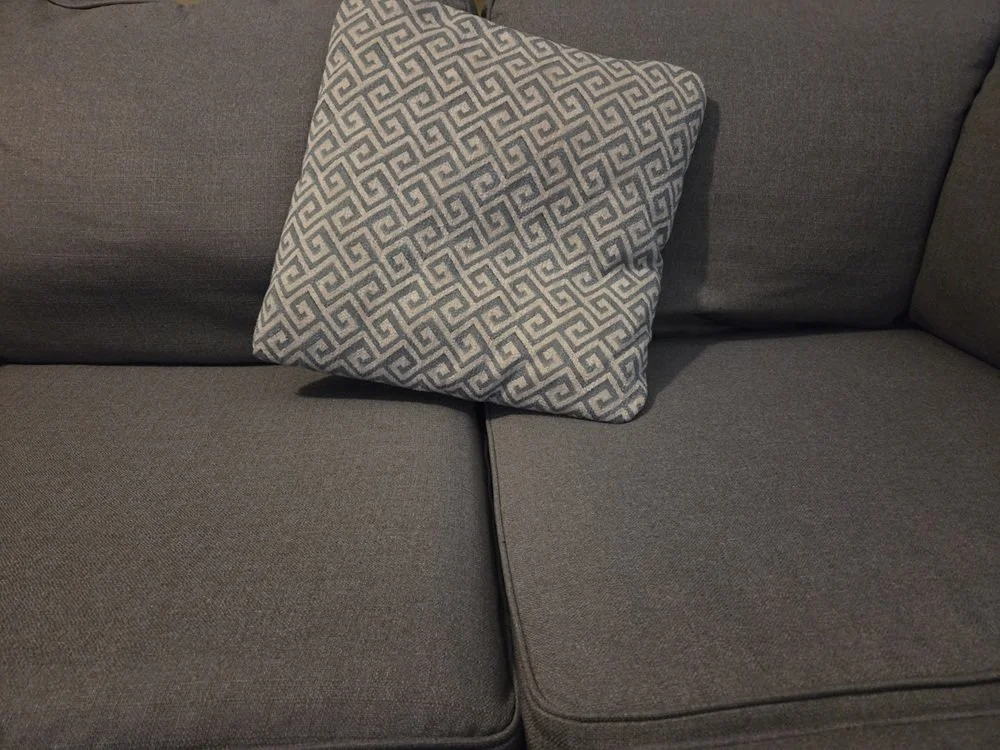
Turning your living room furniture into gymnastics equipment isn't for every household. But for us, that couch frame is an irreplaceable tool for feeding our son's proprioceptive system. Prior to parenting a child with ADHD, I never would have allowed him to tightrope-walk across the cushions. Now that I understand how intensely his nervous system craves that sensory input, I let it slide (strictly within our own four walls, of course).
Two nights ago, he had a massive burst of physical energy right before bedtime. Instead of fighting it, I leaned in and set up a quick, low-effort obstacle course: peer through his new kaleidoscope, leap onto the ottoman, scramble onto the couch, hop across three floor pillows like stepping stones over hot lava, grab a toy from the floor, sprint to the front door, sprint back, and repeat five times.
It worked like a charm. He burned through the restlessness, settled down, and slept deeply.
All that balancing, leaping, and spinning got me thinking: if gross motor work calms his nervous system enough for restorative sleep, what does it do for his daytime cognitive focus?
As it turns out, the connection is profound. A 2025 article from the Santa Clara County Library put it perfectly:
"Play-based activities involving balance help children develop focus, stabilize their bodies, and refine their hand-eye coordination and spatial awareness—all essential building blocks for reading and writing."
That statement stopped me in my tracks. When society pictures a child reading, the image is one of complete physical stillness: sitting upright at a desk, holding a book steady, eyes tracking quiet lines of text. We rarely connect early literacy to spinning on a tire swing, hanging upside down, or traversing sofa cushions.
Yet developmentally, physical balance and visual tracking are inextricably linked.

The Vestibular System
Tucked deep inside the inner ear sits the vestibular system, the body's internal GPS and gyroscope. It constantly monitors gravity, detects head movement, signals acceleration, and informs the brain where the body is oriented in three-dimensional space.
Working alongside proprioception (which communicates joint position and muscular effort), the vestibular system serves as the foundational anchor for all sensory processing. When a child balances on a narrow couch edge, fluid shifts inside the inner ear's semicircular canals, firing high-speed signals straight into the brainstem to adjust muscle tone and maintain upright equilibrium.
What does that inner ear gyroscope have to do with deciphering a storybook?
Everything. The vestibular system is directly hardwired to the motor control of the eyes.
The Vestibulo-Ocular Reflex
The bridge between body movement and clear vision is a mechanism called the Vestibulo-Ocular Reflex (VOR).
Its primary function is to lock and stabilize images on the retina while the head is in motion. If you shake your head side-to-side right now while continuing to read this sentence, the words remain sharp and legible. That is your VOR at work: your inner ear detects the head turn and triggers an instantaneous, equal-and-opposite reaction in the tiny extraocular muscles surrounding your eyes, anchoring your gaze.
Every time a child spins, balances, tumbles, or leaps, they are calibrating their VOR.

When a child’s vestibular system is under-stimulated, sluggish, or poorly integrated, their visual stabilization system must work overtime. The neurological pathway linking the inner ear to ocular movement lacks efficiency. For a child in that state, sitting still to track static, miniature black symbols across a white page is an exhausting athletic grind.
Three Ways Balance Directly Builds Better Readers
Decoding text requires far more physical precision than adults realize. Here is how whole-body play directly supports the mechanics of reading:
Saccadic Eye Tracking: The eyes do not sweep smoothly across text; they make rapid, micro-jumps called saccades from word to word, pausing for milliseconds at a time to absorb meaning. A mature vestibular system anchors the head so the eye muscles can execute these tiny horizontal jumps cleanly, preventing the reader from skipping words, jumping lines, or losing their place.
Crossing the Midline: Reading English demands moving the gaze from the left visual field across the body's midline into the right visual field. Bilateral gross motor activities like balancing along narrow paths, pivoting through obstacle courses, and swinging laterally, condition both brain hemispheres to communicate smoothly so the eyes don't hesitate, hitch, or fatigue when crossing that invisible central divide.
Postural Stability and Cognitive Bandwidth: If a child's core, neck, and pelvic stabilizers are weak or dysregulated, their brain must spend tremendous mental energy simply keeping their torso upright in a chair. By reinforcing core balance through rough-and-tumble physical play, upright posture becomes automated. This frees up maximum cognitive load for higher-order tasks like decoding phonics and comprehending narrative plot.
Movement Before (and During) Literacy
Before understanding neurodivergence and sensory diets, my default reaction might have been to say: "Sit down, sit still, and hold the book."
Now, I view that wild living-room energy through a different lens:
Spinning in circles stimulates the semicircular canals to calibrate ocular stabilization.
Navigating the couch edge trains linear acceleration, postural control, and gaze stillness.
Floor-is-lava obstacle courses demand rapid spatial calculation, visual re-orientation, and midline integration.
His body wasn't merely burning off bedtime restlessness; it was systematically organizing his brain and priming his ocular muscles.
If your child struggles with reading stamina, consistently loses their place, or turns reading time into an emotional battle, the solution might not be another drill or more stationary desk time. The real key might be letting them climb, spin, and test their balance first. And if you’d rather your living room couch didn’t become a permanent obstacle course, bring them over to STEAM Station. We’re building a hands-on space where kids can race, jump, dance, experiment, and burn off that intense sensory energy, calming their bodies, priming their brains, and setting them up to thrive.
