

How Trying (and Failing) at Games Builds Confidence
Personally speaking, I hate seeing my son frustrated. My first instinct when he’s struggling with a difficult puzzle or a tough level in a game is to swoop in and fix it. We want to protect them from disappointment, don't we?
But recently, I’ve had an "aha!" moment (another one! This journey of building STEAM Station is full of them). By swooping in to save the day, I might actually be taking away his opportunity to build something far more valuable than a high score or a completed project: resilience.
At STEAM Station, we think a lot about how active play and exergaming don't just build strong bodies, they are also the perfect training ground for strong minds. And the secret ingredient is something we usually try to avoid: Failure.
The Problem with “Good Job” (The Fixed Mindset)
We all do it. "Good job!" "You're so smart!" "You're a natural!"
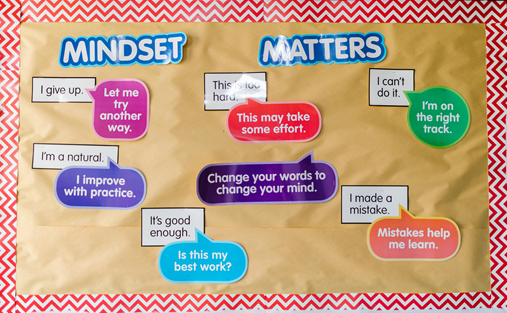
While we mean well, research (especially from psychologist Carol Dweck) suggests that these kinds of praises can backfire. They foster a fixed mindset, the belief that intelligence and ability are something we are just born with.
When a "smart" kid hits a challenge they can't immediately solve, they don't see an opportunity; they often see a dead-end. They think, "I guess I’m not smart at this." This mindset leads kids to avoid risks and give up when things get hard.
The Power of “Yet” (The Growth Mindset)
The antithesis of the fixed mindset is the growth mindset. This is the belief that ability is like a muscle that grows stronger with effort, practice, and the right kind of failure.
In a growth mindset, "I can’t do this" becomes "I can’t do this YET."
This is where games and interactive play become such powerful tools. A play environment (like what we’re creating at STEAM Station) is a low-stakes laboratory. When a child fails in a game (their tower collapses, they miss a step on the dance floor, or they can't quite navigate the geometric logic puzzle), there are no lasting negative consequences.
Failure in a game is just data, or feedback.
Think about a child playing a challenging video game (sedentary or active). When they lose a life, they rarely stop and say, "I am a terrible person and a bad gamer." Instead, they immediately analyze: "What did I do wrong that time? I jumped too late. Next time, I’ll jump sooner."
They don't see failure as an end-point; they see it as the next necessary step toward winning.
Navigating Challenges in a Play Environment
At STEAM Station, we design challenges that are intentionally difficult. Whether a child is navigating a high-speed fitness challenge in our exergaming zone or a tough logic puzzle they can’t quite solve, they will experience frustration.
And that is by design.
When we create this "low-stakes" environment, we give kids the space to navigate challenges and build confidence through a predictable loop:
Try: The initial attempt (curiosity).
Fail: The challenge proves too difficult (frustration).
Analyze: What went wrong? How can I change my strategy? (critical thinking).
Practice: Effort and repetition (grit and determination).
Succeed: Overcoming the hurdle (genuine confidence).
The confidence that comes from this loop is real. It’s not participation trophy-confidence; it’s the confidence that comes from knowing "I can do hard things."
Modeling the Struggle for Our Kids
So, what can we do as parents and educators (and founders!) to support this?
Praise the Process, Not the Person: Instead of saying "You're so smart!" say, "I love how hard you tried that different strategy when the first one didn't work!"
Normalize the Struggle: When kids are building a fort that keeps falling, instead of fixing it, say, "Oh, this looks like a really tough engineering challenge. I'm excited to see how you solve it."
Model Failure Ourselves: Let your kids see you struggle with something and verbalize the growth mindset. “I can’t get this recipe right yet, but I think if I change the oven temperature, I’ll get it next time.”
Ask, Don't Show: Ask open-ended questions like: "Why do you think it fell that way?" "What is one thing you will do differently next time?"
At STEAM Station, we aren't trying to make kids perfect "winners." We are aiming for something better: We want them to be lifelong learners who are confident enough to try, fail, try again, and say, "I got it!"
