

Screen Time vs. Interactive Technology: What’s the Difference?
Technology is everywhere, and honestly, that’s not a bad thing.
Tablets, TVs, and video games can be fun, educational, and even calming for kids (and parents). Screens can help children learn letters, explore new ideas, and unwind after a long day. At STEAM Station, we’re not anti-technology at all.
What we are passionate about is how technology is used.
That’s where the difference between screen time and interactive technology comes in.
What We Usually Mean by “Screen Time”
When most people talk about screen time, they’re thinking of activities like:
Watching shows or videos
Playing seated video games
Using tablets or phones
These experiences are typically passive; kids and adults are looking, tapping, or swiping, often while sitting still. And again, that’s not inherently bad. In moderation, screen time can be entertaining, educational, and even social.
But many parents notice the same thing we do: after a lot of passive screen time, kids often have more energy, less focus, and a harder time transitioning to the next activity.

What Makes Interactive Technology Different
Interactive technology flips that experience on its head.
Instead of sitting and watching, kids are:
Moving their bodies
Solving problems in real time
Collaborating with others
Reacting, adapting, and thinking on their feet
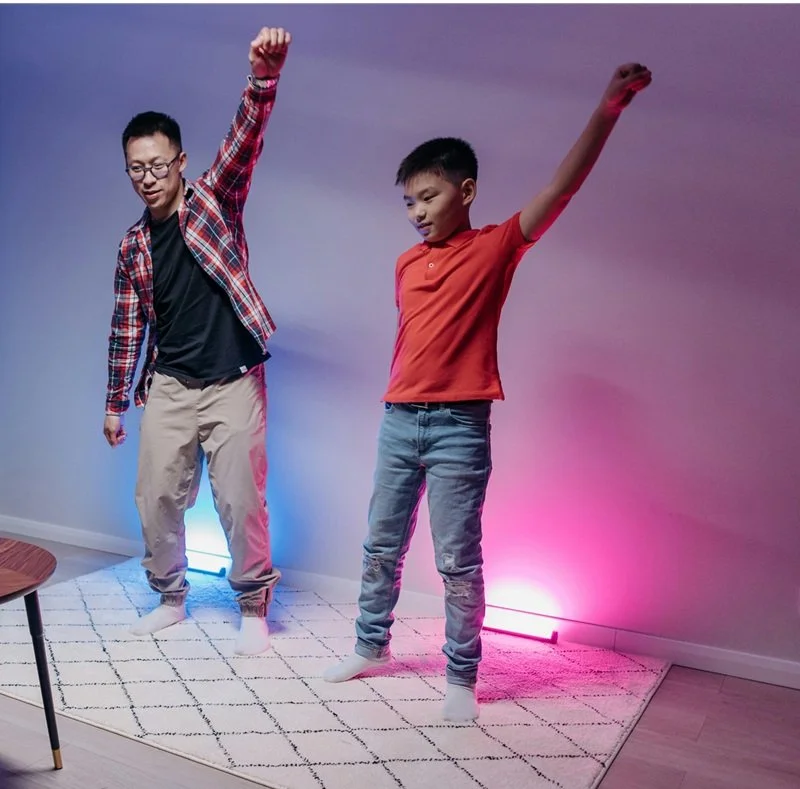
At STEAM Station, our interactive floor and wall games and active movement consoles are designed to get kids up, moving, and engaged. The technology responds to them; their movement, their choices, their teamwork.
Think:
Jumping, running, and reaching instead of tapping
Working together instead of playing alone
Learning through motion, not just observation
Why Movement Matters for Learning
Research consistently shows that kids learn better when their bodies are involved. Movement helps:
Improve focus and attention
Strengthen memory and problem-solving skills
Support coordination and motor development
Boost confidence and social skills
When kids are physically active and mentally engaged, learning sticks.
That’s why we intentionally chose technology that encourages:
Gross motor movement
Cooperative play
Trial-and-error learning
Creativity and curiosity
Kids aren’t just consuming content; they’re participating in it.
Technology as a Tool, Not a Babysitter
One of our core beliefs at STEAM Station is that technology should support development, not replace connection.
Our interactive experiences are designed to:
Be shared (siblings, friends, parents can jump in!)
Encourage communication and teamwork
Create moments of joy, laughter, and accomplishment
You’ll see kids cheering each other on, solving challenges together, and proudly showing parents what they figured out. That’s technology doing what it does best: enhancing real-world interaction.
No Judgment, Just Balance
Every family uses technology differently, and that’s okay. There’s no one “right” amount of screen time, and no parent needs another source of guilt.
Our goal isn’t to tell families what not to do; it’s to offer a space where kids can experience technology in a more active, social, and developmentally supportive way.
STEAM Station exists to complement everyday life:
A place to burn energy
A place to move and think at the same time
A place where technology encourages play, not passivity
Come Experience the Difference
The best way to understand interactive technology is to experience it.
When kids step onto our interactive floors, reach for our wall games, or dive into our movement-based consoles, they’re not just playing, they’re learning, connecting, and moving their bodies with purpose.
That’s the kind of tech we believe in.
We can’t wait to welcome your family and show you what active, intentional technology looks like in action. Join our Founding Family email list to stay in the know ahead of launch!
