
Gross Motor Science: Why Big Movements Build Big Brains
When we think about kids learning, we often picture them sitting at desks, reading books, or focused on a screen. But for children ages 5 and up, some of the most important brain work happens when they are running, jumping, and reaching.
In the world of child development, these are known as gross motor skills.
What Are Gross Motor Skills?
Simply put, gross motor skills are the movements that use the large muscles in the arms, legs, and torso. While we often think of them as being just for physical exercise, they are actually the foundation of a child's ability to navigate the world.
As the experts at the Children’s Hospital of Richmond at VCU explain:
"Gross motor activities are important to everyday physical activities like walking, running, throwing, lifting, kicking, … [they] also form the basis for fine motor skills and relate to body awareness, reaction speed, balance and strength."
Gross motor skills are the primary building blocks for everything people do, from walking down the street to putting groceries away. They provide the core stability and coordination required to navigate the physical world with ease. By mastering these large-scale movements, children aren't just getting exercise; they are honing the bilateral integration and postural control that allow the brain and body to work as a synchronized team for a lifetime of functional tasks.
The Brain Connection: Why Big Movements Matter
When a child jumps on an interactive floor or weaves through a laser maze, their brain is doing a high-speed workout. Gross motor activities stimulate the cerebellum (which handles coordination and balance) and the prefrontal cortex (the area responsible for executive functions like focus and problem-solving).
By mastering big movements, kids develop proprioception; their brain's ability to understand where their body is in space. This spatial awareness is the same mental software they will later use for geometry, physics, and even organizing their thoughts.
Gross Motor vs. Fine Motor: What’s the Difference?
It helps to think of development as building a house: gross motor skills are the foundation and the frame, while fine motor skills are the decor and finishings.
In terms of human bodies, the difference between the two looks more like:
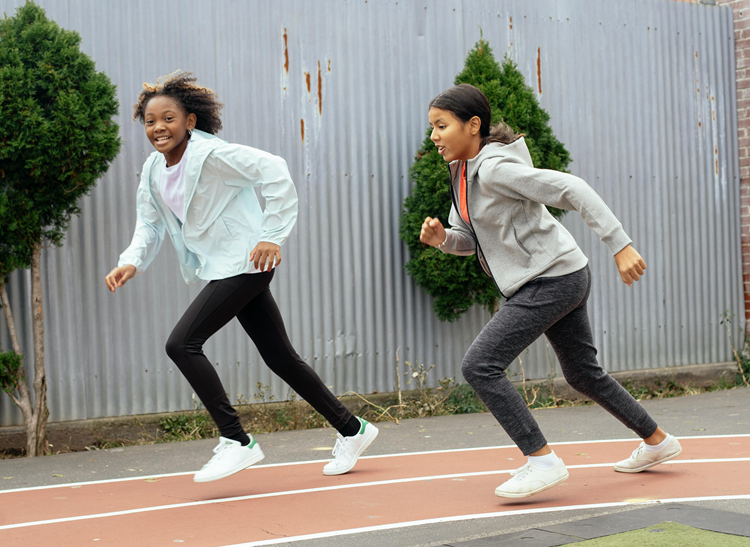
Gross Motor Skills
Using large muscle groups for big actions like running, jumping, climbing, reaching, and playing sports are examples of gross motor skills. One way Cheers Child Care differentiates the two is that gross motor skills require coordination and strength.
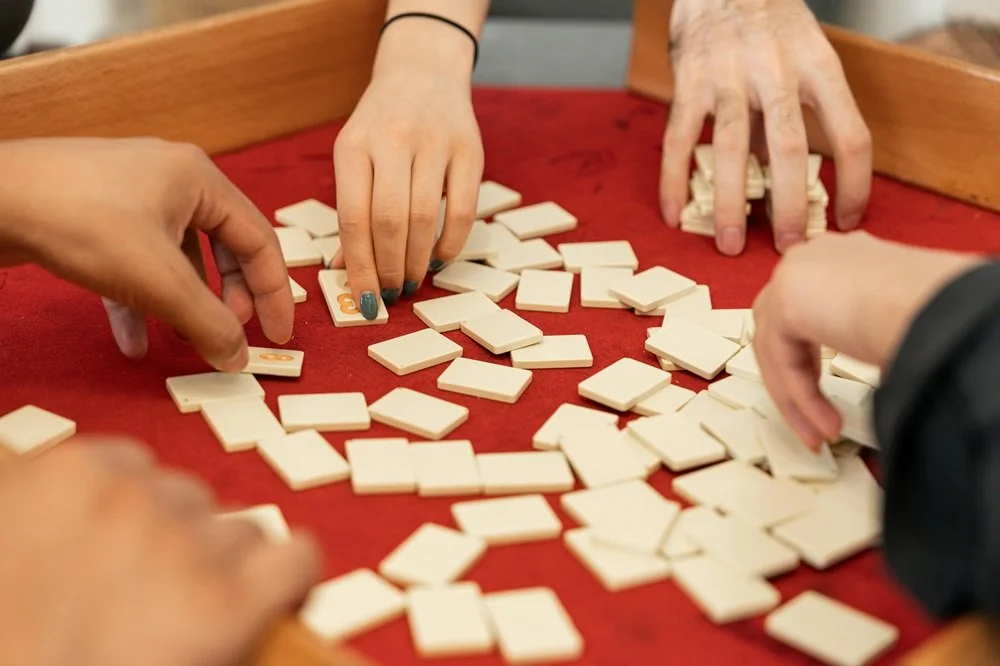
Fine Motor Skills
On the other hand, using the small muscles in the hands and wrists for precise tasks that require control, like writing, buttoning a shirt, eating with utensils, or picking up small objects are examples of fine motor skills.
Movement in Action at STEAM Station
At STEAM Station, we’re designing our environment to challenge both sets of skills, ensuring that every play session is also a brain session.
The Gross Motor Zone (Ages 5+)
Our older explorers get their hearts pumping and neurons firing with:
Interactive Floor: Kids practice timing and agility by jumping and running to keep up with digital games.
Nex Playground: Reaching and stretching to hit targets in augmented reality games builds incredible hand-eye coordination. See more of what Nex has to offer here.
Laser Maze: Weaving, ducking, and crawling through child-safe lasers requires total body control and problem-solving.
Scarf Cannon: Even in the 2-5 zone, everyone loves a scarf cannon! Reaching high to feed the vacuum tubes is a fantastic way to engage the core and shoulders. Just watch out for the little kids who are still learning to control their bodies.
The 2-5 Fine Motor Zone
While the big kids are running, our younger visitors can focus on the fine-tuning their skills in a specialized area. We encourage precision and focus through:
Magnetic Tiles: Building towers and 3D shapes to solve engineering challenges.
Train Table: Navigating magnetic and wooden trains along winding tracks.
Wooden Blocks: Developing the steady hands needed to stack the perfect skyscraper.
The Takeaway
Movement isn’t just a break from learning; movement is learning. Whether your child is sprinting across our interactive floor or carefully placing a magnetic tile, they are building the neural pathways that will support them for a lifetime.
Ready to get moving? Join us at STEAM Station and let the brain-building begin!
