

What Makes Every Kid a Little Engineer
It happened at the dinner table tonight. I told my son I was sitting down to write a blog post for STEAM Station and asked him what he thought the topic should be.
Without skipping a beat, he looked up and said: "Little engineers! Because I'm a little engineer!"
My heart completely melted. But once the puddle of mom-joy settled, I realized he hit the nail right on the head. He is a little engineer. And if you have a child at home who constantly asks “why” or "how," builds sprawling structures out of loose parts, or completely rearranges the living room to test a theory, you have a little engineer, too.
At STEAM Station, we don’t think engineering is something kids have to wait until college to learn. In fact, childhood is when our engineering instincts are at their absolute peak.
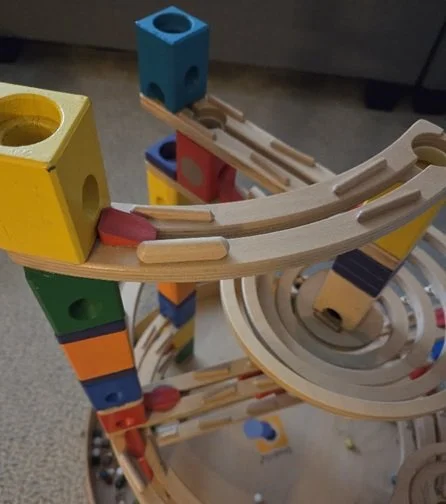
The Anatomy of a Little Engineer
Grown-up engineers use math, science, and technology to solve real-world problems. Little engineers do the exact same thing but their "real world" is centered around play, movement, and imagination.
You know you have a little engineer on your hands if they are constantly mastering these three skills:
The Art of the "What If?": Little engineers don't just look at a toy or an object for what it is; they look at what it could be. A cardboard box isn't trash; it’s a command center. A collection of loose blocks isn't a mess; it's a structural integrity test.
Rapid Prototyping (A.K.A. Trial and Error): Watch a child build a tower. It falls. They don't give up. They look at the base, adjust a piece, change the weight distribution, and try again. That isn't just play; that is the engineering design loop in its purest form.
Blending Art with Action: Innovation doesn't happen in a sterile vacuum. Little engineers love the creative side of design. They care about how their creation looks, how it moves, and the story behind it. They prove every day that you can't have STEM without the Arts.
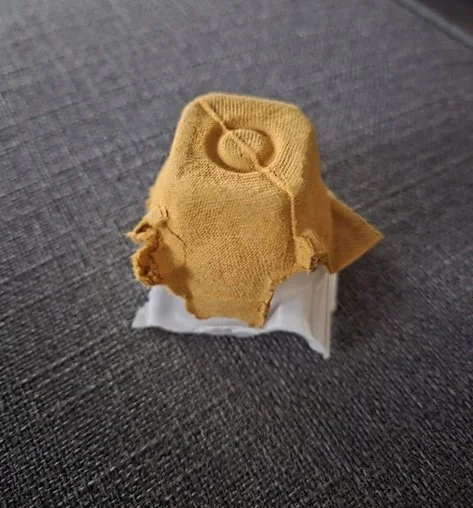
Fueling the Fire (without the Tech Overload)
As parents, how do we keep that spark alive? It’s not about buying expensive kits with rigid, 50-step instructions. It’s about giving them the freedom to experiment.
Give them loose parts. Blocks, PVC pipes, fabric, ramps; items that don't have a single "correct" way to be used. Let them dictate the rules of the build.
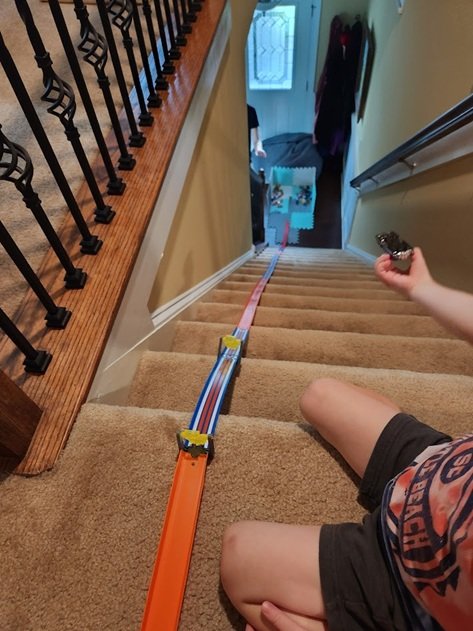
Encourage movement. Engineering isn't a desk job for a kid. They need to see physics in action. How fast does a car go down a steeper ramp? What happens to their momentum when they jump or spin?
Celebrate the crashes. When a project fails, that’s where the real magic happens. Instead of fixing it for them, ask: "Why do you think it did that? What should we try next?"
Spaces Designed for Big Imaginations
When we open the doors to STEAM Station, this is exactly the energy we are building for. We are creating a single-floor, fully accessible tech lab and movement center where kids don't have to take their shoes off to step into the role of creator.
We want a space where kids can test their physical boundaries, dive into interactive digital media, sing their hearts out, and build things that are as big and loud as their imaginations.
To my favorite six-year-old engineer: thanks for the inspiration tonight. This station is being built for you, and for every other kid ready to engineer the future.
